

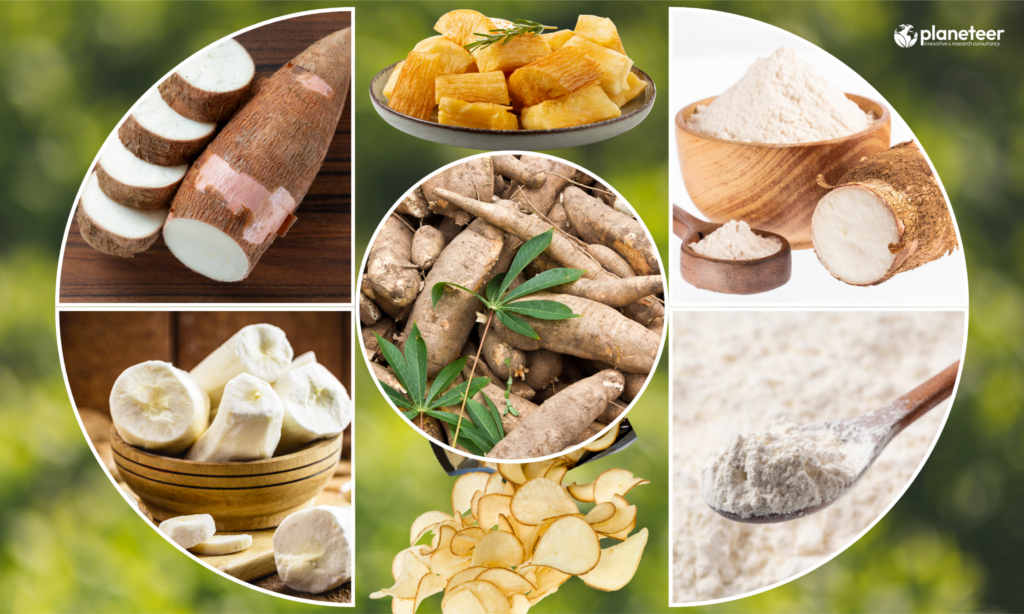
Cassava (Simaltarul): One Crop → Multiple Products → Endless Possibilities
Cassava, locally known as Simaltarul in Nepal, is one of the most versatile root crops in the world. While it is widely cultivated and commercialized in Africa, Southeast Asia and Latin America, cassava in Nepal is still largely underutilized. Most Nepali farmers grow cassava only for household consumption, animal feed or as a secondary crop.
However, changing food habits, rising demand for gluten-free products, growing livestock and poultry industries, and increasing interest in value-added agribusiness are creating new opportunities for cassava farming in Nepal.
With proper farming practices, processing technology and market linkage, cassava can become a profitable agribusiness crop for Nepali farmers and entrepreneurs. This blog explores cassava production, farming methods, market demand, value-added products, business opportunities, and how Planeteer Innovative can support cassava-based agribusiness development in Nepal.
What is Cassava (Simaltarul)?

Cassava (Simaltarul) is a drought-tolerant, high-energy root crop grown mainly in tropical and subtropical regions. It is rich in carbohydrates and serves as a major food source for more than 800 million people globally.
In Nepal, cassava is commonly called Simaltarul, especially in the Terai and inner hill regions. It grows well in warm climates and poor soils, making it suitable for marginal lands where other crops struggle.
Current Status of Cassava Farming in Nepal
Cassava farming in Nepal is still at a small and traditional level. It is mainly grown in:
- Terai districts
- Inner Terai regions
- Some mid-hill areas with warmer temperatures
Most farmers cultivate cassava using local varieties, without improved planting material, scientific spacing, or modern post-harvest handling. As a result, productivity remains low and commercial farming is rare.
Despite this, Nepal imports starch, animal feed ingredients, and processed food items that can be produced from cassava. This gap shows strong potential for local cassava-based agribusiness development.
Why Cassava is Important for Nepal
Cassava offers several advantages that make it suitable for Nepal’s agribusiness sector:
- It can grow well in low-fertility soils
- It tolerant to drought and climate stress
- It requires less irrigation than many crops
- High yield per hectare
- Multiple industrial and food uses
In a country where climate change and rising production costs are major concerns, cassava can become a climate friendly smart crop for farmers.
Cassava Farming Practices in Nepal
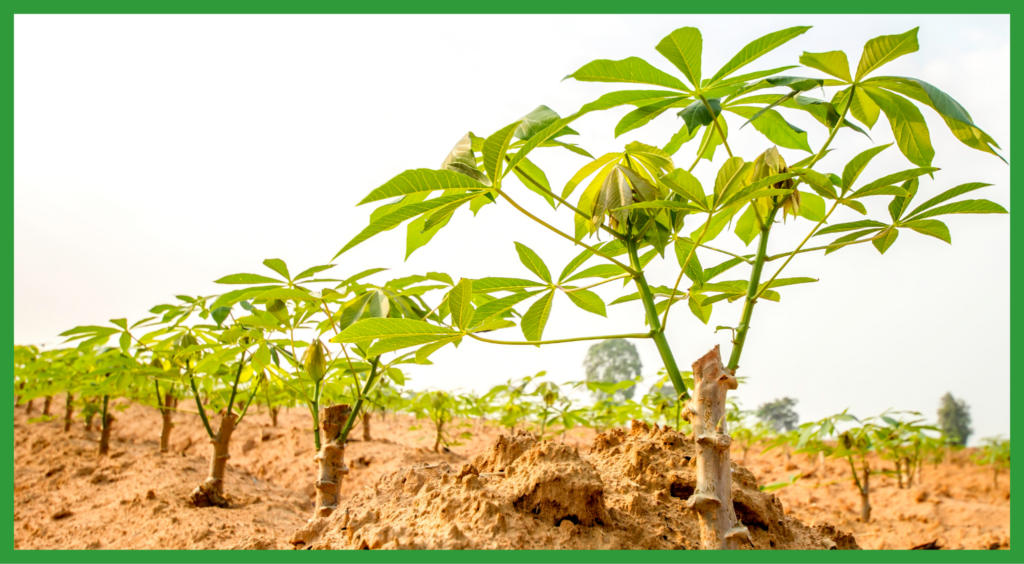
Climate and Soil Requirement
Cassava grows best in:
- Warm temperatures (20-35°C)
- Well-drained sandy or loamy soils
- Areas with moderate rainfall
Waterlogging should be avoided, as cassava roots rot easily in flooded fields.
Land Preparation
Land should be ploughed well and free from weeds. Raised beds or ridges are recommended, especially in areas with heavy soil or high rainfall.
Planting Material
Cassava is grown easily using stem cuttings, no seeds required. Healthy, disease-free stems from mature plants are selected and cut into 20–25 cm pieces.
Using improved varieties can significantly increase yield, which is an area where technical support is important.
Spacing and Planting

Recommended spacing:
- 1 meter × 1 meter for commercial farming
Planting is usually done at the beginning of the monsoon season to ensure proper establishment of plants.
Crop Management
Cassava requires:
- Regular weeding in the early stage
- Minimal fertilizer compared to cereals
- Occasional pest and disease monitoring
With proper management, cassava can be harvested within 8-12 months.
Harvesting and Yield
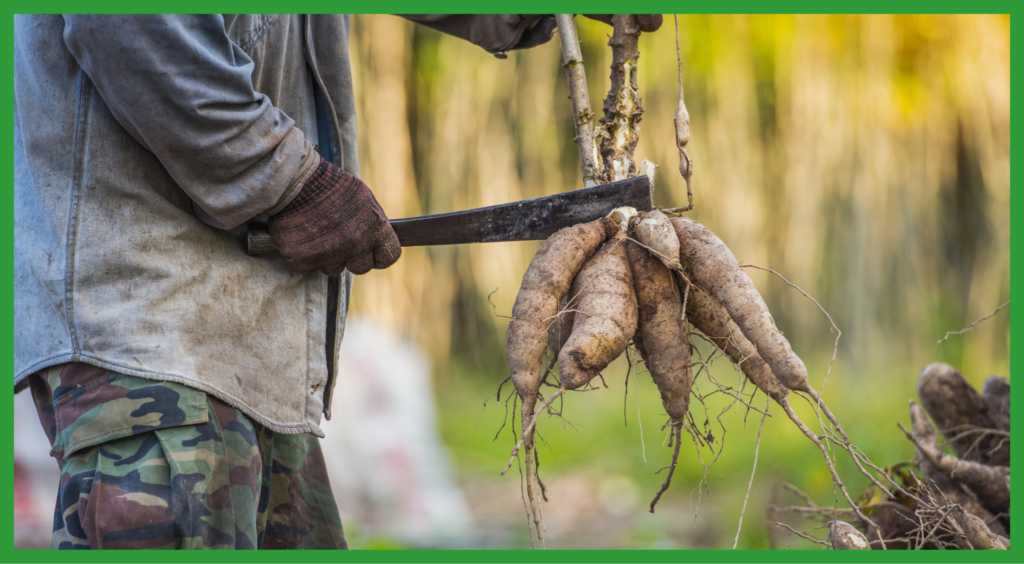
Cassava roots are good to harvest when they become fully mature. Delayed harvesting may reduce its product quality.
Average yield in traditional farming:
- 10–15 tons per hectare
With improved practices and varieties:
- 25–40 tons per hectare
This yield difference highlights the importance of guidance, technology adoption and training.
Cassava Products and Value Addition Opportunities
One of the biggest strengths of cassava is its wide range of value added products.
Food Products
- Cassava flour
- Tapioca pearls
- Cassava chips
- Gluten-free snacks
- Traditional foods mixed with maize or rice flour
Industrial Products
- Starch for food and textile industries
- Sweeteners and glucose syrup
- Ethanol and biofuel (long-term potential)
Animal Feed
- Poultry and livestock feed ingredients
- Feed pellets mixed with maize and soybean
Export-Oriented Products
- Dried cassava chips
- Starch for regional markets
- Specialty gluten-free products
Cassava Market Potential in Nepal
Domestic Market
The demand for cassava-based products is growing due to:
- Expansion of poultry and dairy industries
- Increasing interest in gluten-free meals
- Opportunities for import substitution
Nepal currently depends heavily on imports for starch and feed ingredients, which can be locally produced from cassava.
International Market Opportunities
Globally, cassava is traded in:
- India
- China
- Southeast Asia
- Europe (gluten-free food market)
With proper processing, quality control and certification, Nepal can enter regional niche markets, especially for organic or specialty cassava products.
Business Opportunities from Cassava in Nepal
Cassava offers opportunities across the value chain:
- Commercial cassava farming
- Seed and planting material production
- Small-scale processing units
- Medium-scale starch factories
- Livestock feed processing
- Export-oriented product development
These opportunities are especially suitable for:
- Youth entrepreneurs
- Cooperatives
- SMEs
- Agribusiness startups
Challenges in Cassava Agribusiness Development
Despite its potential, cassava farming in Nepal faces challenges:
- Lack of improved varieties
- Limited technical knowledge
- Poor post-harvest handling
- Weak processing infrastructure
- Limited market linkage
These challenges cannot be solved by farmers alone and require professional technical support.
How Planeteer Innovative Can Support Cassava Agribusiness in Nepal
Planeteer Innovative & Research Consultancy plays a key role in transforming crops like cassava into viable agribusiness ventures.
Technical Support
- Cassava farming system design
- Improved variety selection
- Yield improvement strategies
Processing & Product Development
- Cassava flour and starch processing setup
- Product formulation and testing
- Food safety and quality standards
Training & Capacity Building
- Farmer and entrepreneur training
- Food Safety Management Systems (FSMS)
- Good Manufacturing Practices (GMP)
Market Linkage & Business Strategy
- Market research and feasibility studies
- Branding and packaging guidance
- Export readiness and compliance support
Through an integrated approach, Planeteer helps bridge the gap between traditional farming and modern agribusiness.
Future of Cassava Farming in Nepal
Cassava farming in Nepal has the potential to:
- Improve farmer income
- Reduce import dependency
- Support livestock and food industries
- Create rural employment
- Promote climate-resilient agriculture
With the right policies, private sector involvement and technical expertise, cassava can become a strategic crop for Nepal’s Agrifood system.
Conclusion
Cassava or Simaltarul, is no longer just a neglected root crop. It represents a powerful opportunity for agribusiness growth in Nepal. From farming to processing and marketing, cassava offers multiple income streams for farmers and entrepreneurs.
By combining traditional knowledge with modern technology, quality standards and market-oriented thinking, Nepal can unlock the true value of cassava. With professional guidance from organizations like Planeteer Innovative, cassava farming in Nepal can move from subsistence to sustainable commercial success.