

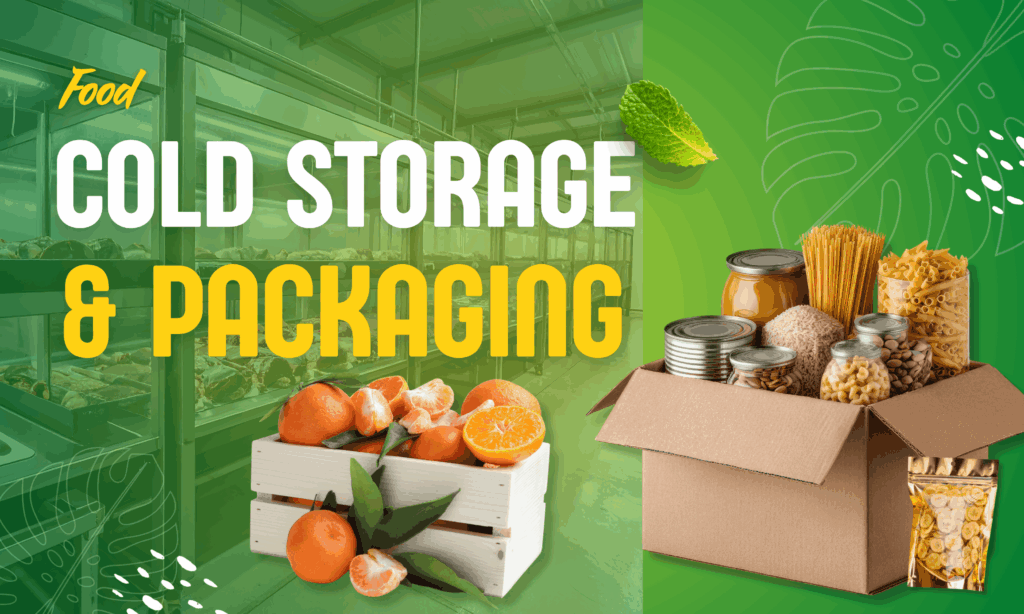
“Cold storage and proper packaging reduce losses and increase farmer income”
Agriculture in Nepal is essential to the economy, employing more than two-thirds of the rural population. However, a recurrent obstacle undercuts farmers’ income: post-harvest loss, which is the loss of food quality and quantity between harvest and consumption. Perishable fruits and vegetables in Nepal might lose 20-30% of their value if not handled and stored properly.
Post-harvest loss not only drains profits but also weakens food security and reduces the economic return of hard-earned labor. Fortunately, cold storage and scientific packaging provide practical solutions that significantly extend shelf life, preserve quality, and increase farmers’ bargaining power in the market.
This guide explains everything farmers and agribusiness owners in Nepal need to know in simple, practical and actionable terms.
1. What Is Post-Harvest Loss and Why It Matters
Post-harvest loss refers to the quantity and quality loss of crops after harvesting, before they reach consumers. Causes include:
- Respiration and decay
- Poor handling during transport
- Lack of temperature control
- Pest infestation
- Inadequate packaging
For example, a study on Nepalese potatoes found that storage losses were lowest (≈4.4%) in cold storage compared to traditional storage methods.
In fruits like mandarins, storage conditions and packaging significantly influence weight loss, vitamin content and shelf life. Cool storage combined with good packaging extended shelf life from ~32 days to ~91 days in comparative research.
Without cold storage and proper packaging:
- Farmers are forced to sell immediately at low prices
- Excess produce spoils and reduces income
- Food waste increases in the supply chain
- Market access is limited, especially for export
In short: cold storage and packaging turn crops into sellable products, not waste.
2. How Cold Storage Reduces Post-Harvest Loss
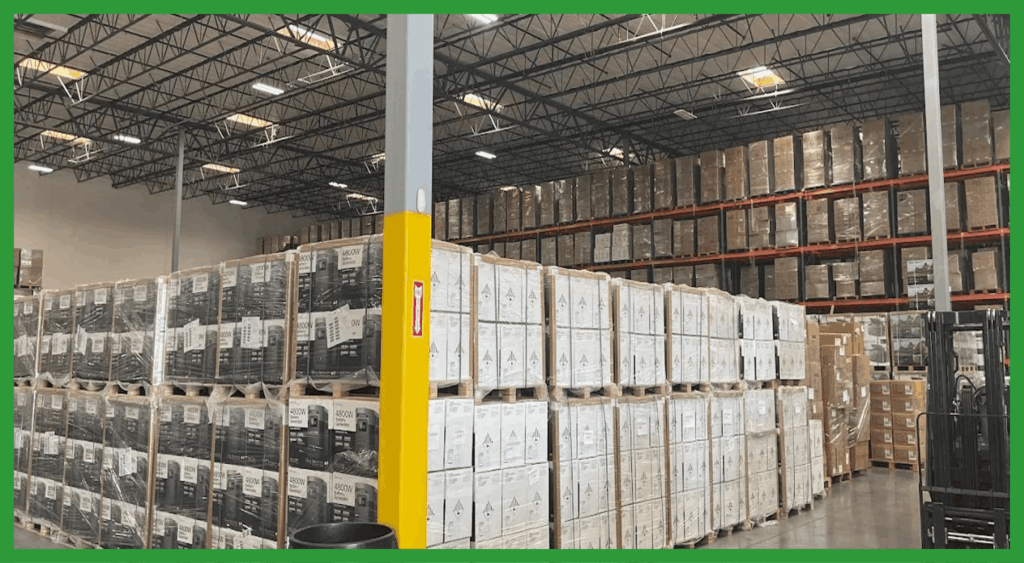
Cold storage works by slowing the biological processes that cause produce to deteriorate:
- Slows respiration: Produce consumes its own sugars slower at low temperatures
- Inhibits microbial growth: Bacteria and fungi grow slowly in cool conditions
- Reduces moisture loss: Keeps vegetables and fruits firm and weight intact
- Maintains color and nutrition: Nutrients like vitamin C are preserved at low temperatures
- Extends shelf life: Fresh products last longer and can be sold in better markets
These benefits help farmers:
- Avoid distress selling at harvest peaks
- Plan sales for higher prices
- Reduce waste and increase profit margins
- Access distant, premium markets
Cold storage is not a luxury, it is infrastructure that protects farm income.
3. Cold Chain Explained (Farm to Fork)
A cold chain is a temperature-controlled supply chain that keeps products fresh from farm to end consumer. It includes:
- Pre-cooling at harvest
- Cold storage or cold room
- Cold transport / refrigerated vehicles
- Packing and sorting facilities
- Retail cold displays
In Nepal, the major weak link is often storage and handling, but advances are emerging, such as CoolBot-based cold rooms, mobile coolers, solar-powered solutions and cooperative storage centers. A functioning cold chain ensures produce quality is maintained throughout the supply journey.
4. Types of Cold Storage for Farmers

a) Walk-In Cold Rooms
Ideal for cooperatives or farmer groups. Large capacity and controlled temperature for:
- Fruits
- Vegetables
- Milk products
- Flowers
b) Small Cold Storage Units
Good for individual farmers or small producers:
- Modular cold rooms up to a few tons
- Energy-efficient and affordable options
c) CoolBot-Based Cold Storage
A cost-effective option built with an insulated room and smart controller. It uses standard air conditioners to maintain cold temperatures, significantly reducing capital costs.
d) Solar-Powered Solutions
Remote and off-grid farming areas benefit from solar cold storage. Solar energy reduces dependence on unpredictable electricity.
Each solution has its own cost, capacity and energy needs, but every farmer can choose a version that fits their scale and budget.
5. Importance of Scientific Packaging
Storage is only part of the solution. Packaging protects produce physically and chemically, with techniques like:
- Modified Atmospheric Packaging (MAP) alters gas composition around the food and slows ripening.
- Ventilated crates and trays allow airflow and reduce moisture buildup.
- Perforated films for produce needing respiration control.
- Insulated packaging for transport after cold storage.
Proper packaging:
- Reduces physical damage
- Controls moisture and gas exchange
- Extends shelf life even further
- Improves market presentation and quality perception

6. How to Plan a Cold Storage Facility (Step-by-Step)
Step 1: Assess Your Production and Needs
Ask:
- What crop(s) do you produce?
- At what volume and season?
- How long do you need to store?
- Do you have access to reliable electricity?
Step 2: Choose the Right Type
Based on scale:
- Small farm: CoolBot or modular cold room
- Cooperative or business: Larger cold room with racks
- Off-grid farms: Solar options
Step 3: Select the Correct Temperature Range
Different crops require different conditions:
- Leafy greens: ~0-4°C
- Fruits: ~2-8°C
- Potatoes (long storage): ~4-10°C
- Herbs and flowers: ~1-2°C
HACCP food safety principles help determine exact parameters.
Step 4: Design the Space
Consider:
- Insulation quality
- Door seals
- Air circulation
- Temperature monitoring
Temperature and humidity control systems are essential for consistent performance.
Step 5: Prepare Packaging Stations
A clean, shaded area near storage for:
- Sorting
- Washing
- Grading
- Packing
Good handling before storage reduces damage and loss.
Step 6: Use Monitoring Tools
Temperature loggers and basic digital sensors ensure continuous performance and alert you to problems.
7. Cold Storage and Packaging Costs: What to Expect
Costs vary by size and technology:
- Small modular cold room: Can be significantly less expensive than full commercial cold stores.
- CoolBot system: Saves up to 30-50% in equipment cost compared to traditional cold room compressors.
- Insulation, monitoring, trays and packaging materials add to investment.
While initial costs exist, reduced losses can pay back within one or two seasons by saving produce and capturing higher market prices.
8. Benefits for Nepalese Farmers: Real Impact
Here’s what farmers gain when they adopt cold storage and packaging solutions:
- Reduced Post-Harvest Loss: Studies show cold storage leads to significantly lower storage loss compared to traditional methods.
- Better Market Timing: Farmers can store produce and sell when prices rise.
- Higher Quality: Retains texture, nutrition and appearance.
- Expanded Market Access: Farmers can reach distant or urban markets without rapid spoilage.
- Improved Income: Less loss, better pricing and value-added packaging increase profit.
- Stronger Food Security: Reduced waste ensures more food reaches consumers.
9. Transportation and Cold Chain Extension
Cold storage alone helps, but cold transport ensures quality from farm to retailer.
Refrigerated trucks or insulated transport systems prevent warmth or shock exposure during long, mountainous routes. These are becoming available in Nepal, especially in major producing belts.
10. Government Programs and Support in Nepal
Development partners and the government are slowly recognizing the need for cold chain infrastructure:
- Investment support for cold storage hubs
- Grants and financing for agribusiness enterprises
- Partnership programs to build regional cold chain facilities
Expanding cold storage at cooperative and district levels reduces the investment burden on individual farmers.
11. Integrating Cold Storage with Value Addition
Cold storage and packaging are the first steps toward value addition:
- Pre-packaging for retail
- Ready-to-cook vegetable packs
- Branded fresh produce boxes
- Freezing high-value items like berries or herbs
These add additional income streams for farmers and markets.
12. Challenges and Solutions for Nepal’s Cold Chain
Challenges
- Irregular electricity supply
- Initial investment costs
- Lack of awareness and training
- Geographic constraints
Solutions
- Solar-powered cold storage units
- Cooperative and shared storage models
- Training programs on cold chain management
- Use of affordable solar and IoT technologies to monitor performance
Innovations like solar motors, CoolBot controllers, and IoT temperature sensors are helping overcome common barriers.
Conclusion
Cold storage and packaging are not optional add-ons, they are essential infrastructure for modern farming. Reducing post-harvest loss improves income, food security, and the flow of agricultural goods in Nepal. Small farmers, cooperatives, and agribusiness entrepreneurs who adopt these systems will see:
- Lower waste
- Higher sale prices
- Better food quality
- Stronger market access
Building a cold chain across Nepal is critical if agricultural production gains are to be translated into higher farmer income and stronger rural economies.
Start by assessing your product, connecting with technology suppliers and exploring cooperative models. Invest in the right cold storage solution, even a small well-managed system can dramatically cut losses and boost profits.