


“Agribusiness is not luck, it is strategy”
Agriculture has always been the backbone of Nepal’s economy. For generations, farmers across the hills, Terai, and mountains have practiced traditional farming methods to grow rice, maize, wheat, vegetables, fruits and raise livestock. While traditional farming has helped families survive, today it is often not enough to provide stable income, employment for youth or long-term prosperity.
The good news is that farming is no longer only about growing crops for household use. With the right planning, technology and market connection, farmers can turn traditional farming into a successful agribusiness. Agribusiness means treating farming like a business, focusing on productivity, quality, processing, branding, marketing and profit.
This blog is written especially for Nepalese farmers and young entrepreneurs who want to turn traditional farming into a successful agribusiness. It explains every important step in simple words, with practical ideas that work in the Nepalese context.
1. Understanding the Difference Between Traditional Farming and Agribusiness
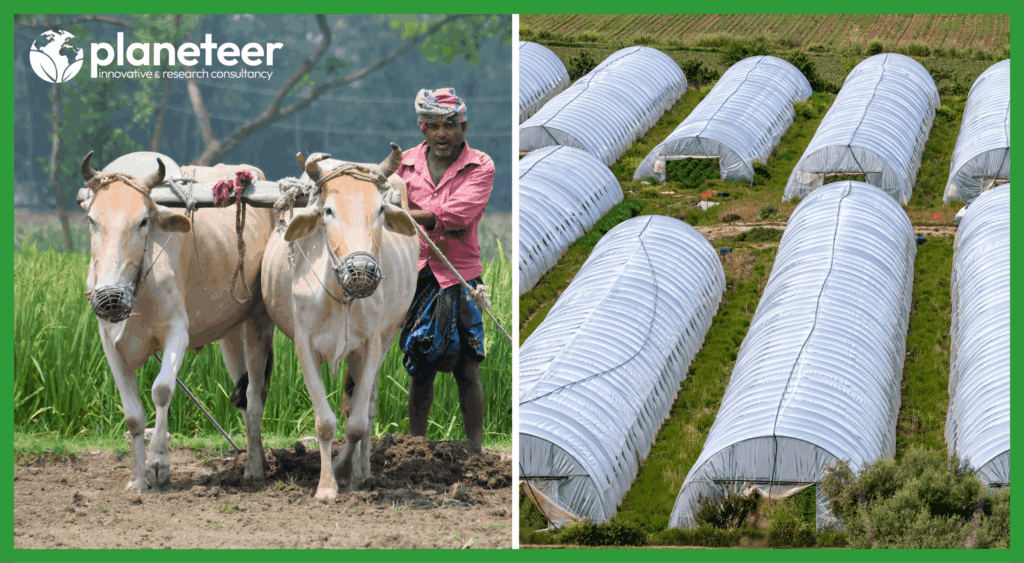
Traditional farming mainly focuses on producing food for family consumption and selling surplus in local markets. It depends heavily on rainfall, local seeds, family labor and old techniques. Income is uncertain and profits are usually low.
Agribusiness, on the other hand, is a complete system that includes production, input supply, processing, storage, packaging, marketing and distribution. It treats farming as an enterprise with planning, investment, record keeping and profit goals.
When you turn traditional farming into a successful agribusiness, you move from survival farming to commercial farming. You start thinking about:
- What crop or product gives better market price
- How to reduce cost and increase yield
- How to add value through processing and packaging
- How to reach better markets
This change in mindset is the first and most important step.
2. Choosing the Right Agribusiness Opportunity in Nepal
Nepal has a diverse climate and geography, which creates many agribusiness opportunities. The key is to choose the right product based on your land, climate, capital and market demand.
Some profitable agribusiness areas in Nepal include:
- Poultry farming (broiler and layer)
- Dairy farming and milk processing
- Vegetable and off-season vegetable farming
- Mushroom farming
- Beekeeping and honey production
- Fish farming
- Fruit orchards (apple, kiwi, citrus, mango)
- Spice and herb farming (cardamom, ginger, turmeric, coffee)
- Food processing (pickle, chips, juice, dried fruits)
Before selecting, study:
- Local market demand
- Transportation and storage facilities
- Input availability (feed, seeds, chicks, fertilizer)
- Your own experience and interest
Choosing the right enterprise makes it easier to turn traditional farming into a successful agribusiness.
3. Planning Your Farm as a Business
Successful agribusiness always starts with proper planning. Many farmers fail because they invest without a clear plan.
Prepare a Simple Business Plan
Your farm business plan should include:
- Type of farming activity
- Estimated investment cost
- Expected production and income
- Operating expenses
- Market and buyers
- Risk and backup plan
This plan helps you understand whether your idea is profitable and helps you get loans or subsidies.
Land Use Planning
Use your land wisely by:
- Dividing areas for crops, livestock, storage and water
- Improving irrigation
- Protecting soil fertility
Proper planning helps reduce waste and increase efficiency.
4. Adopting Modern Farming Techniques

One major step to turn traditional farming into a successful agribusiness is adopting modern technology and scientific practices.
Improved Seeds and Breeds
Use certified seeds and improved livestock breeds that give higher yield and better disease resistance.
Modern Irrigation
Drip irrigation, sprinkler systems and water harvesting reduce water waste and increase crop growth.
Soil Testing and Fertilizer Management
Soil testing helps apply the right amount of fertilizer, reducing cost and improving productivity.
Farm Mechanization
Use machines such as:
- Mini tillers
- Power weeders
- Feed mixers
- Egg incubators
Mechanization saves time, reduces labor cost and increases output.
5. Diversification and Integrated Farming
Depending on only one crop or livestock is risky. Weather, disease or price fall can cause heavy loss.
Integrated farming combines different activities such as:
- Crop + livestock
- Fish + duck farming
- Vegetable + mushroom
- Dairy + biogas + compost
Diversification spreads risk and creates multiple income sources, helping to turn traditional farming into a successful agribusiness sustainably.
6. Value Addition Through Processing and Packaging

Selling raw products gives low profit. Processing and packaging increase value and shelf life.
Examples:
- Milk into yogurt, paneer, cheese
- Fruits into juice, jam, dried fruits
- Vegetables into pickle and chips
- Honey into branded bottles
Simple processing units can be started at a small scale with low investment.
Good packaging:
- Protects product quality
- Attracts customers
- Allows premium pricing
Value addition is one of the strongest ways to turn traditional farming into a successful agribusiness.
7. Quality Control and Food Safety
Modern consumers want safe and quality food. Following food safety standards increases trust and market access.
Important practices:
- Clean production and storage
- Proper use of pesticides and medicines
- Hygienic processing
- Labeling and expiry date
Following government food standards helps you enter supermarkets and export markets.
8. Market Linkage and Branding
Production alone does not guarantee success. Market connection is equally important.
Identifying the Right Market
- Local markets
- Collection centers
- Cooperatives
- Hotels and restaurants
- Supermarkets
- Export traders
Branding and Direct Marketing
- Create your own brand name and logo. Use social media and digital platforms to promote your products.
- Direct selling through farm gate sales, farmers’ markets, and online delivery gives better price and customer connection.
- Strong marketing is essential to turn traditional farming into a successful agribusiness.
9. Financial Management and Record Keeping
Many farmers do not keep records and do not know whether they are making profit or loss.
Maintain records of:
- Investment cost
- Daily expenses
- Production quantity
- Sales and income
This helps you:
- Control cost
- Improve efficiency
- Apply for loans and subsidies
Proper financial management is the backbone of agribusiness success.
10. Accessing Government Support and Subsidies in Nepal
The Government of Nepal provides many support programs for farmers, such as:
- Subsidy on farm equipment
- Livestock insurance
- Low-interest agricultural loans
- Training and extension services
- Grants for processing units
Visit your local agriculture office or consult agribusiness experts to get updated information.
Government support makes it easier to turn traditional farming into a successful agribusiness with less risk.
11. Our Services: Supporting Farmers to Build Successful Agribusiness in Nepal

At Planeteer Innovative & Research Consultancy, we strongly believe that the success of agribusiness depends not only on hard work, but also on correct planning, modern technology, professional guidance and continuous technical support. Many farmers fail not because they lack effort, but because they lack proper direction at the right time.
Our role is to become a long-term technical partner for Nepalese farmers and agribusiness entrepreneurs who want to turn traditional farming into a successful agribusiness. We provide end-to-end agribusiness consultancy services, starting from idea development to full project implementation and market connection.
Below are our major services designed especially for the Nepalese agricultural sector:
- Farm and Livestock Project Design
- Feasibility Study and Business Planning
- Modern Farm Setup and On-site Technical Support
- Food Processing and Packaging Consultant
- Training and Capacity Building Programs
- Market Linkage, Branding and Agribusiness Development
- Government Subsidy, Loan and Project Documentation Support
12. Role of Youth and Entrepreneurship in Agribusiness
Many Nepalese youths are returning to agriculture. Agribusiness creates employment, income and innovation opportunities.
Youth can contribute through:
- Smart farming technology
- Digital marketing
- Agribusiness startups
- Food processing enterprises
Youth involvement will shape the future of Nepal’s agriculture sector.
13. Challenges and Solutions in Agribusiness Transformation
Common challenges include:
- Lack of capital
- Poor infrastructure
- Market fluctuation
- Disease and climate risk
Solutions:
- Crop insurance
- Cooperative farming
- Contract farming
- Climate-smart agriculture
Facing challenges wisely helps farmers successfully turn traditional farming into a successful agribusiness.
Conclusion
Turning traditional farming into a successful agribusiness is not difficult, but it requires planning, learning and commitment. Nepal has huge potential in agriculture, supported by diverse climate, growing markets and government programs.By choosing the right enterprise, adopting modern technology, adding value, improving marketing and managing finance properly, any farmer can move from subsistence farming to profitable agribusiness.
The future of Nepal’s agriculture lies in agribusiness. Start small, learn continuously and grow step by step. Today’s traditional farmer can become tomorrow’s successful agribusiness entrepreneur. If you are planning to turn traditional farming into a successful agribusiness, consult professional agribusiness experts for farm design, feasibility study, training and project support. The right guidance can save time, reduce risk and increase profit.