


Turmeric, known as Besar in Nepali, is one of the most valuable spice and medicinal crops grown in Nepal. It is widely used in daily cooking, traditional medicine, Ayurveda, cosmetics and health supplements. In recent years, the demand for turmeric has increased rapidly both in the domestic and international markets because of its health benefits, especially due to curcumin content.
For Nepalese farmers and agribusiness entrepreneurs, turmeric farming offers a golden opportunity to earn stable income with low risk and good profit. Turmeric is easy to grow, suitable for different climates of Nepal, and has strong processing and export potential. When managed properly, turmeric farming can be transformed into a successful agribusiness.
This complete guide is specially prepared for farmers and investors who want to start Turmeric Farming Agribusiness in Nepal in 2026. It explains every important step in simple words, from land selection to marketing, processing, cost, profit and government support.
1. Why Choose Turmeric Farming Agribusiness in Nepal?
Nepal has favorable climate, fertile soil, and suitable altitude for turmeric cultivation. The growing health awareness among consumers has increased the demand for organic and high-quality turmeric products.
Major advantages of turmeric farming agribusiness in Nepal include:
- High demand in food, medicine and cosmetic industries
- Easy cultivation with low management complexity
- Suitable for Terai, mid-hills and warm hill regions
- Long storage life after drying
- Strong processing and export potential
- Government support under spice crop development programs
Turmeric can be sold as fresh rhizome, dried turmeric, powder, oil and curcumin extract, making it an ideal crop for value addition and agribusiness development.
2. Climate and Soil Requirement for Turmeric Farming
Climate
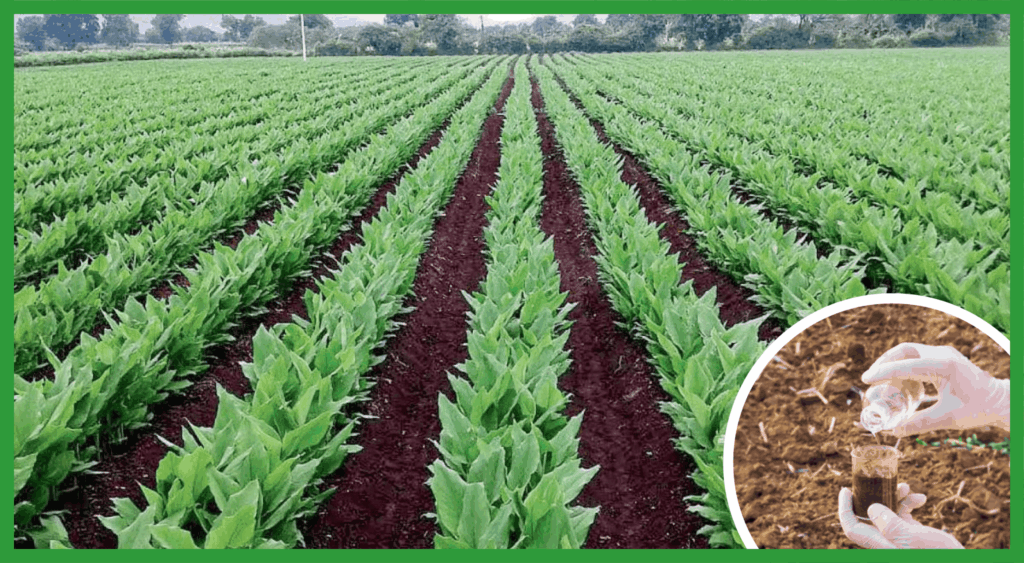
Turmeric grows best in warm and humid climates with moderate rainfall. The ideal temperature range is between 20°C and 30°C. Areas with annual rainfall of 1,000 to 2,000 mm are suitable.
In Nepal, turmeric can be successfully grown in:
- Terai region
- Inner Terai valleys
- Mid-hill regions up to 1,500 meters altitude
Soil
Well-drained, fertile loamy or sandy loam soil is best for turmeric farming agribusiness in Nepal. Soil should be rich in organic matter with good moisture-holding capacity.
Ideal soil conditions:
- pH range: 5.5 to 7.5
- Good drainage to avoid waterlogging
- High organic content
Soil testing before planting helps improve yield and reduce fertilizer cost.
3. Suitable Turmeric Varieties for Nepal

Choosing the right variety is very important for successful turmeric farming agribusiness in Nepal. Some high-yielding and popular varieties include:
- Kapurkot Aduwa-1 (locally developed variety)
- Suguna
- Roma
- Suvarna
- Megha Turmeric-1
- Curcuma caesia
While selecting seed rhizomes, always choose healthy, disease-free, and well-matured rhizomes for better germination and yield.
4. Land Preparation and Planting Method
Land Preparation
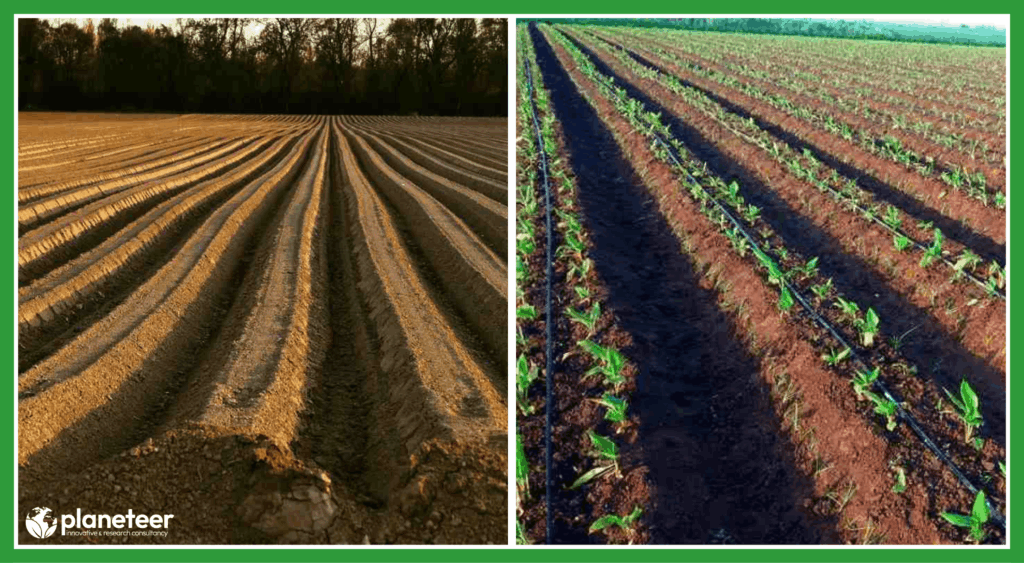
Proper land preparation increases turmeric yield and reduces disease problems.
Steps include:
- Deep ploughing 2-3 times to loosen soil
- Removal of weeds and crop residues
- Preparation of raised beds or ridges for drainage
- Application of well-decomposed farmyard manure or compost
Planting Time
In Nepal, turmeric is generally planted from:
- March to May in Terai and inner Terai
- April to June in mid-hill regions
Seed Rate and Spacing
- Seed rhizome requirement: 1,500-2,000 kg per hectare
- Spacing: 30-45 cm between rows and 20-25 cm between plants
Rhizomes should be planted 5-7 cm deep with buds facing upward.
5. Nutrient Management and Fertilizer Use
Turmeric is a heavy feeder crop and requires good nutrition for high yield.
Recommended practices:
- Apply 20-25 tons of farmyard manure per hectare before planting
- Use balanced NPK fertilizer based on soil test
- Apply nitrogen in split doses during growth stages
- Add micronutrients if deficiency symptoms appear
Organic manure improves soil structure and enhances curcumin content in turmeric.
6. Irrigation and Water Management
Although turmeric needs moisture, excessive water can cause rhizome rot.
Best practices include:
- Light irrigation immediately after planting
- Regular irrigation during dry periods
- Avoid waterlogging by providing proper drainage
Mulching with straw or dry leaves helps conserve moisture and control weeds.
7. Weed, Pest and Disease Management
Weed Control
Weeds compete for nutrients and reduce yield. Regular hand weeding or shallow hoeing is recommended during early growth stages.
Major Pests and Diseases
Common problems include:
- Rhizome rot
- Leaf spot
- Shoot borer
Control measures:
- Use healthy seed rhizomes
- Practice crop rotation
- Avoid waterlogging
- Apply recommended bio-pesticides or fungicides when needed
Integrated pest management is ideal for sustainable turmeric farming agribusiness in Nepal.
8. Harvesting and Yield
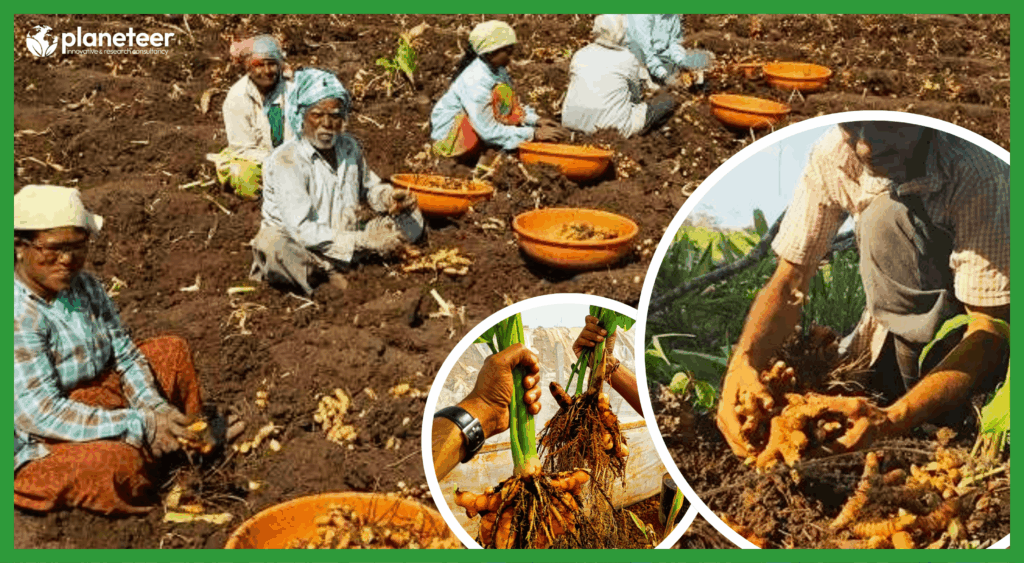
Turmeric is ready for harvest after 7-9 months when leaves turn yellow and dry.
Harvesting method:
- Uproot plants carefully using spade or hoe
- Separate rhizomes from shoots
- Clean and wash thoroughly
Average yield:
- Fresh rhizome: 20-30 tons per hectare
- Dry turmeric: 4-6 tons per hectare
Yield depends on variety, management and soil fertility.
9. Post-Harvest Handling and Processing
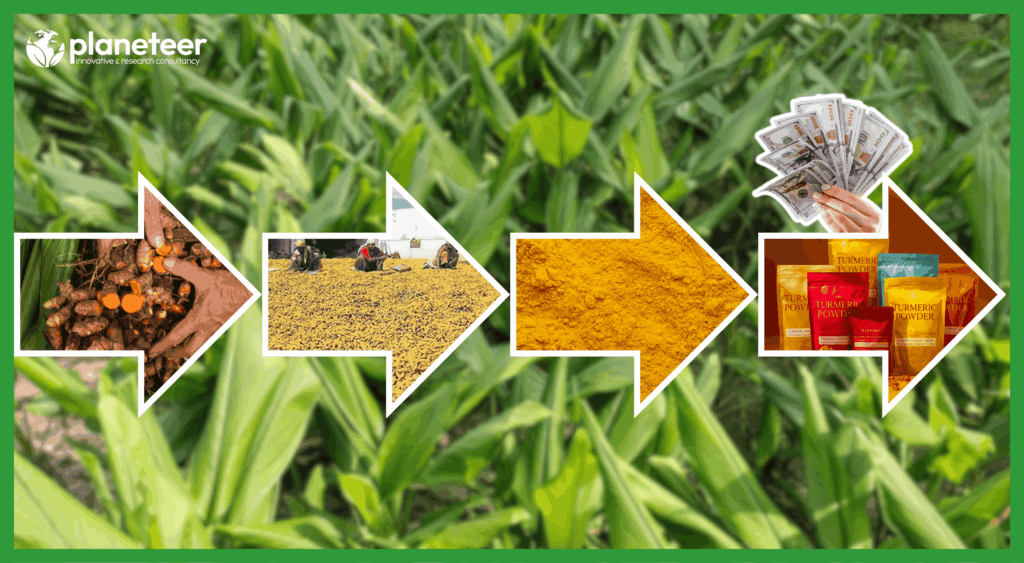
Processing adds value and increases profit in turmeric farming agribusiness in Nepal.
Main steps:
- Boiling fresh rhizomes
- Drying under sun or mechanical dryer
- Polishing dried turmeric
- Grinding into powder
- Packaging and labeling
Processed turmeric has longer shelf life and better market price.
10. Cost of Production and Profit Analysis
Estimated Cost per Hectare
Major expenses include:
- Seed rhizomes
- Land preparation
- Fertilizers and manure
- Labor cost
- Irrigation and plant protection
Average total cost: NPR 250,000 – 350,000 per hectare
Expected Income
- Fresh turmeric sale or processed product sale
- Average gross income: NPR 500,000 – 800,000 per hectare
Profit
Net profit: NPR 200,000 – 400,000 per hectare (depending on management and market price)
Value addition through processing can double the profit.
11. Market Opportunities and Export Potential
Turmeric has strong demand in:
- Local markets
- Food processing industries
- Ayurvedic and herbal companies
- Hotels and restaurants
- Export markets (India, China, Middle East)
Organic and branded turmeric products fetch premium prices.
12. Government Support and Subsidies
The Government of Nepal promotes spice crop development through:
- Subsidy on seed and equipment
- Training and extension services
- Support for processing units
- Agricultural loans and insurance
Farmers should contact local agriculture offices for updated schemes.
13. Role of Professional Consultancy in Turmeric Agribusiness
Planeteer Innovative & Research Consultancy supports turmeric farmers through:
- Farm and project planning
- Feasibility study and profitability analysis
- Processing unit setup and packaging guidance
- Market linkage and branding support
- Training and technical supervision
Professional guidance reduces risk and improves long-term profitability.
Conclusion
Turmeric farming agribusiness in Nepal is a highly promising opportunity for farmers and entrepreneurs in 2026. With proper planning, modern cultivation techniques, processing, and strong market linkage, turmeric can become a stable source of income and employment.
By adopting scientific practices, adding value through processing, and taking professional support, Nepalese farmers can successfully build profitable turmeric agribusiness enterprises and contribute to the growth of Nepal’s agricultural economy.
If you are planning to start turmeric farming agribusiness in Nepal, consult experienced agribusiness professionals for farm design, feasibility study, processing setup and market development. The right guidance can help you reduce risk, increase profit and build a sustainable agribusiness future.